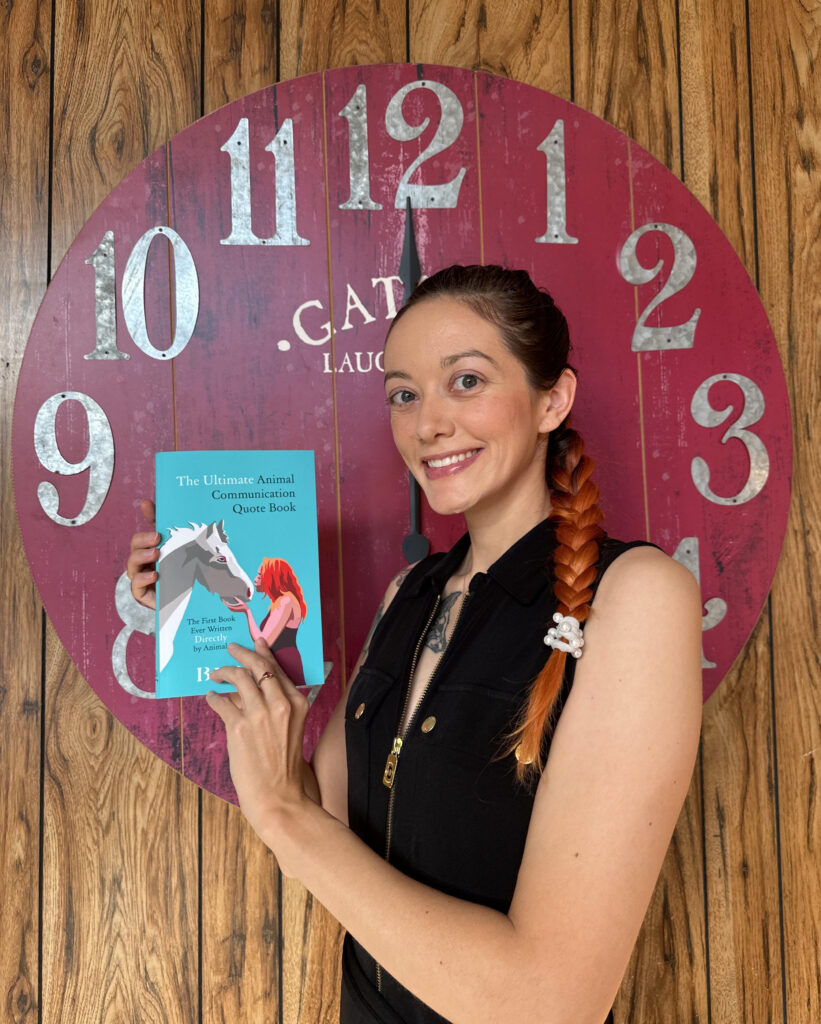
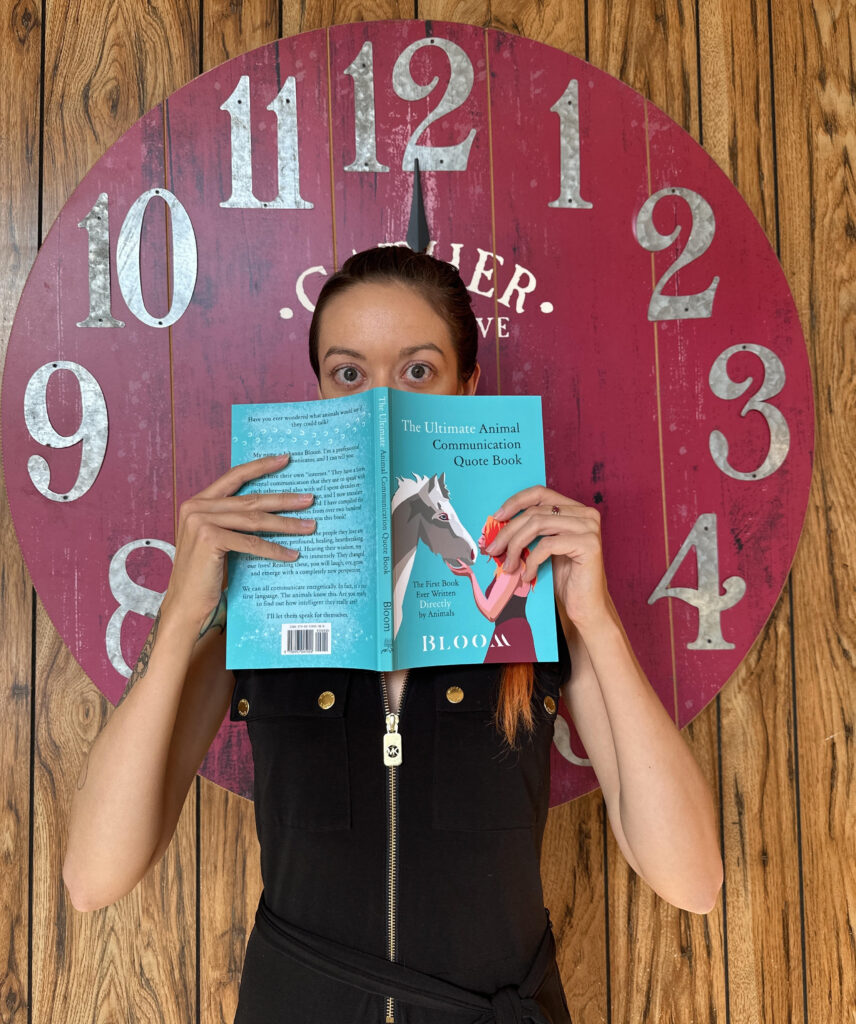
Today, we are celebrating one of our incredible Book Magic authors and her brand-new book, The Ultimate Animal Communication Quote Book: The First Book Ever Written Directly by Animals. Johanna Bloom is an animal communicator at Bloom Animal Communication, and she is also a wonderful artist of pet portraits, so she has illustrated her own book, as well as channeling all of the messages inside from the animals she has worked with in her animal communication sessions.
If you are thinking about writing and publishing a book, you will love hearing about Johanna’s journey from querying over 85 agents to making the decision to self-publish, and what it was like publishing a channeled book.
Click play to listen to this conversation or keep scrolling to read the highlights:
First of all, how does it feel to finally become a published author?
I am so excited about this book. It has been literally a lifelong dream, like little, tiny “childhood me” always wanted to be an author, and now it’s finally happening. It’s finally real.
I’m actually in a state of disbelief right now. I can’t believe it’s just out, like it’s done. It’s published, I have it in my hands, people are reading it, and it’s a really good feeling. It’s almost like a “what’s next?” kind of feeling, ’cause this has been such a big goal for so long. I’m in a state of like, wait a minute, like what do I do now? So that’s great.
I had complete creative control the entire time, which is more than I ever expected to have. Because people warn you and say that your publisher is going to want to edit things. They’re going to want to change things. They have a specific audience they’re going to market to. That’s sort of the trade-off, you know? If you wanna publish a book, you usually have to release some of that control. But I didn’t have to do that.
I had control the whole time over exactly how I wanted to say things, how I wanted to organize the chapters, where to put the illustrations, what font I wanted to use. It was amazing.
I mean, it was probably more work. I’m sure it was more work to be doing the organization myself, but I think it paid off – it looks exactly the way I had hoped.
What inspired you to write this book in the first place?
What’s funny about this book is that I didn’t know I was writing a book. When I started writing it, I was just journaling. I would do my channels, I would do sessions with animals, and they always say things that blow my mind, that stand out to me, where I’m like, oh my goodness, I need to share this!
I started sharing animal quotes a little over a year ago on my TikTok channel, and eventually on Instagram as well. And people loved them. People loved the quotes and were asking for more and more and more. And eventually, I had so many sessions that I couldn’t post them all. I couldn’t keep up with it anymore, but they were still important.
And so I was still journaling. After I do a session, I’ll sit down and journal and jot down the quotes that stood out to me the most. And. I couldn’t post them all on social media, so I just started compiling them. And then one of my clients, Ashley Mondor, introduced me to Natalie and interviewed you on her podcast.
And I listened to that and found out about Book Magic, and I was like, wait a minute, I could make this into a book. I kind of already have all the material. It’s all there. It’s in four different journals, so I had to organize it and compile it. But it was as if the book was already mostly done by the time I realized I was writing it, which was kind of ironic.
What would you say is the main message that you want readers to walk away with?
I suppose the main thing that my book is centered around is telepathy. The way animals use telepathy to communicate with each other and with us, and the process of learning to tune in. As far as I understand, we’re all born with the ability, we’re just conditioned out of it. We’re conditioned to believe, oh, that’s not real. Animals can’t talk. There’s no such thing as mental communication.
And so I had to unlearn that, and a lot of what animals tell my clients is that same kind of process of deconstructing like, “Hey, like I’m talking to you. This is what I’m trying to communicate. This is how to connect with me.” So, that’s a really strong theme.
Through the course of the book, I also try to include things from their viewpoint that seem important that we wouldn’t know without being able to talk to them directly, like common questions that people have. I tried to include those. I tried to include both practical things and things about management and husbandry, as well as the mind-blowing spiritual concepts that come through.
I grew up on a farm. I trained horses professionally for 10 years and developed the ability [to communicate with animals], almost subconsciously, while I was doing that. And then I had some realizations over the years where I realized that, "Oh my goodness, they're actually communicating with me mentally!" They're sending me images, they're sending me concepts.
And then after that, I took some training and learned how to do it from a distance, which I didn’t know until just a couple of years ago, that we can actually connect with animals regardless of distance. I don’t have to be right there with them. So that’s how most of my current sessions are done via Zoom.
Then it just built from there. ThenI had a new client base that was worldwide instead of just local, and I got to take down quotes and compile them. So, it’s become very big. The whole thing just kept growing.
I am their voice, which is very cool. It’s an honor, and it’s something I take very seriously.
How does your book fit in with your overall business & content strategy?
The book is like a perfect intermediate step between the social media quotes I’ve been sharing, which have to be very short and sweet and condensed, and the full sessions, which are half an hour to an hour of me just translating.
So those are very detailed, and the book has become a sort of sweet spot right in the middle for people who maybe aren’t ready to book a session yet, or they have done sessions with me, but they want to know what other people’s animals say, and I can flesh out the quotes more. A lot of the social media quotes are in the book, too, but they’re more fleshed out.
I’m able to give more context and what was actually going on in that session, so that’s been really nice, too.
And you work with all different kinds of animals, so you have messages from many different creatures, don't you?
Yes, I do. I have them organized by chapter. I start with the common ones. I’ve got dogs and then a chapter for cats, and then horses, and then exotics and farm animals and passed animals too, like across the rainbow bridge.
So I’ve got them all organized, and I’ve got reptiles and fish and amphibians and small mammals. There’s a chapter for wild animals, too. So I tried to put a little bit of everything to give the full spectrum.
I feel like this first book is probably going to become part of a series because I'm still journaling. I'm still compiling. So there's already a book two in process. This first one was an introduction.
I tried to explain what I do, bring a lot of different perspectives into it, show the diversity of it, and open my readers’ minds to the possibilities that this creates for us. So, it is exciting.
What made you decide to self-publish instead of going the traditional publishing route with this book?
I had tried to traditionally publish three times with three books that I wrote before this one, and I could never do it. I took seminars where I learned how to pitch. I pitched to 85 different agents, and mostly I didn’t get any responses.
Sometimes I would get a response that was a little encouraging. They would say, “Hey, this is well written. It’s well presented, but it’s not what we’re looking for right now.” I had some people tell me, “I don’t see a market for this book.” As in, I don’t see how it could sell.
This is basically what they told me, and I just got tired of it. I got discouraged. I’m pretty good with rejection, but at some point, I just had to come to terms with it: if I want my work to get out in the world, I’m gonna have to do it myself, because I’m just tired of trying to convince other people to believe in it. I believe in my work. I already do, and so I was thinking about self-publishing for a long time.
But I’ve seen people self-publish before, and I know how difficult it is, and I know how aimless it can be. When you’re just stepping into that world, and all you’ve really got is Amazon, and you might get the book published, but then how do you convince anybody to buy it because you don’t have the credibility of a publisher, you know, like a big name backing you up?
I wanted to be super professional about it. I wanted it to be taken seriously. I didn't want to just write this and then have it sit on the shelf, collecting dust. So I was waiting, honestly, I think I was looking for you for years. I was waiting for some kind of guidance.
I’d started watching videos on YouTube, trying to learn all about the process, and it just seemed so complex and so advanced. There were so many different options, and everyone had done something different.
When I found your program, it went step by step. There were actual modules for everything, and you had already done this before, so you had already done all of the trial and error.
I think it would’ve taken me at least 10 years to get to this point on my own, to go through the process and do the trial and error and find which software programs were the best and which companies I wanted to work with, and which print-on-demand company to use, and how to navigate Amazon without getting trapped.
Because they do try to trap you and make it so you have to exclusively sell with them. There were things like that that I knew I would face. Having someone to teach me who had navigated it all before legitimately saved me a decade of work.
How has being part of the Book Magic community impacted your journey as an author?
I’ve gotten the benefit of learning from your experience so that I didn’t have to go through it myself, and it was just far less frustrating. I didn’t feel frustrated while I was doing this process. There were some elements of it that were tricky and that I had to spend some days or weeks learning to navigate, but at the end of the day, I could tell that you had authority and experience, and I really trusted your opinion. I had a really clear path to follow, and that was just lovely. I legitimately can’t thank you enough for that.
There were also a couple of other students who were kind of on the same track as me, and we could exchange manuscripts and give each other some feedback.
And one of my fellow students helped me format the afterword that I hadn’t really planned to write. She gave me some really solid advice that helped me format it in a way that I was really happy with.
And there were other people who were working through the same software that I was and learning it for the first time. One of my fellow students made me a screen recording of how she navigated something.
So, it was just really helpful. I felt very supported the whole time.
Did this process bring up any difficult emotions or things that you didn't expect to feel as you went through it?
It did. The hardest part was actually at the end, like the last month, when it was basically all done. I was just waiting for my release date and running my pre-launch campaign. I was scared. I got this case of stage fright.
The whole rest of the process, I had been so focused and so like, “Yes, this is what I want. I’m willing to work for it. I’m willing to learn everything.” And I was so excited, and I had so much energy and motivation to do it. And then just at the very end, I got scared, and I was like, “Wait a minute, once it’s out, it’s out.”
I didn’t know what to do with myself once it was done, and that brought up some big emotions. I think I might have been accidentally manifesting delays, because there were some weird delays that happened at the end. I think it’s like anything, you know, it was new. It was something I hadn’t done before.
I had been working for so long to get to this point that once I had made it, it’s actually going to come out now, and I’m done. And this is now new territory. It was such a big goal just to get here.
There was definitely a fear of being seen and being really vulnerable. Sharing on social media, I can take down posts, I can edit things. There's a certain amount of control that I still have over the message that I'm sending out. And a book is different. Once it's out, it's in print and I can't change anything about the message. I can't control how people are gonna respond to it.
In a lot of cases, I can’t even see their reactions. They can tell me what they thought of the experience, but there are a lot of people who will read this, and I will never know how it impacted them.
And I just had to be okay with that. I had to be like, you know what, I believe in what I’m saying. This is genuinely my message, and I’m just gonna send it out and let the world react to it. And that was big for me.
It's like your gift to the collective, basically. And most of the time you don't hear from people, but I'm guessing you have heard from some people, and I'm curious what kind of feedback you have been getting!
I’ve heard from some people. I had a little flood of orders when I first released my book on the 1st of January, and I think some people are still getting their books. But as for the ones who have, I’m mostly getting feedback about the illustrations, actually. People are really excited about the illustrations because that was something that I don’t think I’ve shared a lot on social media.
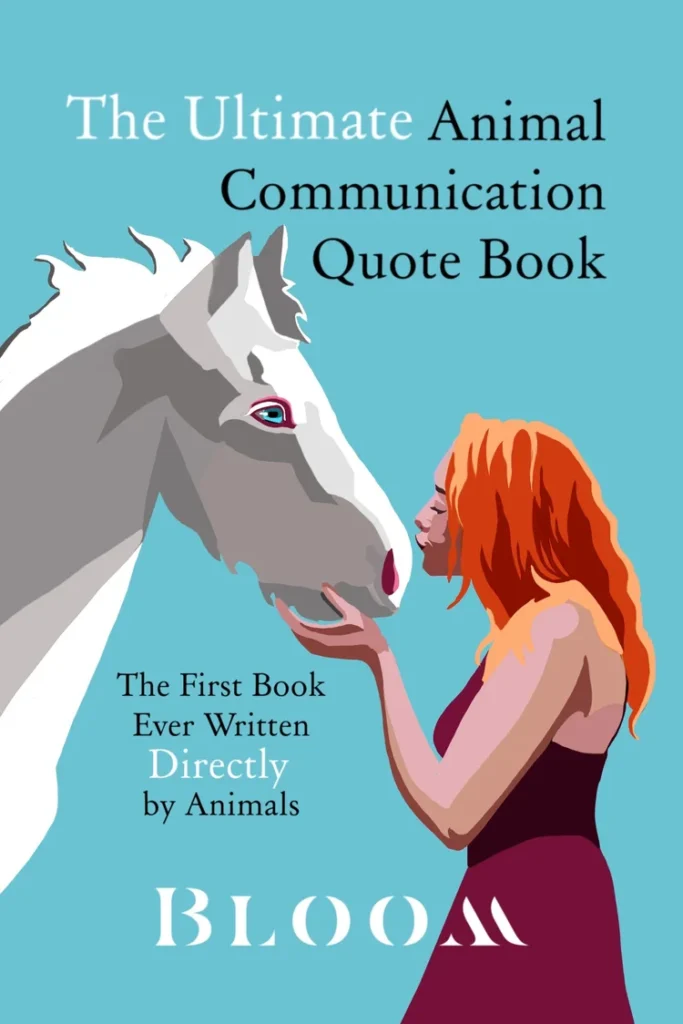
My art’s been sort of a separate field for me. I’ve done pet portraits for a long time, but they’re so private. I haven’t really shared that a whole lot. So, people open the book and experience my art for the first time, and they’ve been telling me that it adds a lot of depth to it. They tell me they really like the cover design; it creates an immediate visual connection, which is enhanced by the words and quotes.
So, what’s really fun for me to realize is that it’s created a sort of multimedia experience for them, which is very cool.
I got to put in some longer interviews, more than I can do on social media, and I’ve been getting a lot of feedback about that, about the emotional response that people have to some of these interviews. Because it’s a mixed bag.
I try to be very fair about representing the spectrum of things that animals say. Sometimes it's very positive. Most of the time, it's very loving. But there are some sad stories, too. I just included it all. And so I've heard from some people that those interviews were very impactful.
I get comments like, “Oh my goodness, this wrecked me!” Or, “This completely changed my perspective.” And people are telling me how relatable the animals are in their stories and their perspectives. Even the sad things.
And that makes me really happy, too. Because there’s not as much of a difference. That’s what I’m trying to do, I think, is bridge the gap. We’re not as different from animals as we think we are.
Have you heard any feedback from animals about your book? Obviously, they're probably not sitting down and reading it with a cup of tea, but have they mentioned anything about it?
Well, mine have. I have four animals, and they were very involved in the process. They were giving me a lot of feedback. There is artwork and images of my animals throughout the book, and a lot of quotes from them, because I included my own animals when I did sessions with them.
And I know that it’s been emotional for them, too. Realizing that these things that we talk about, these things we’ve talked about for years, concepts we’ve worked through with training and with our relationships with each other… these are now being released, to be absorbed into people’s consciousness.
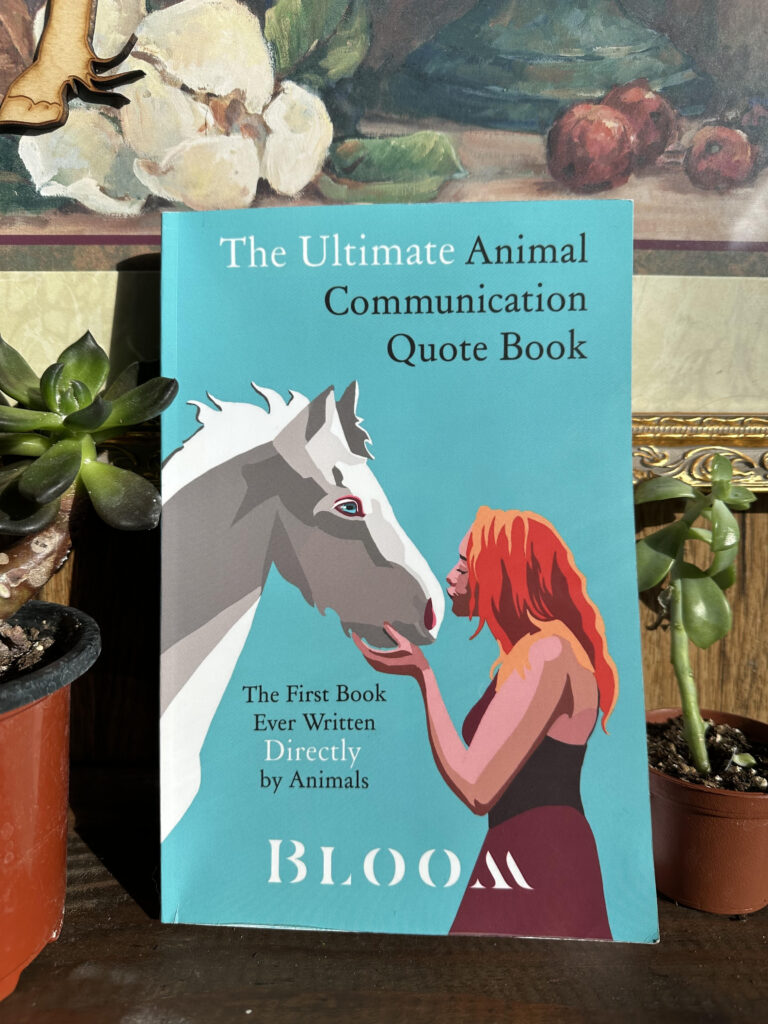
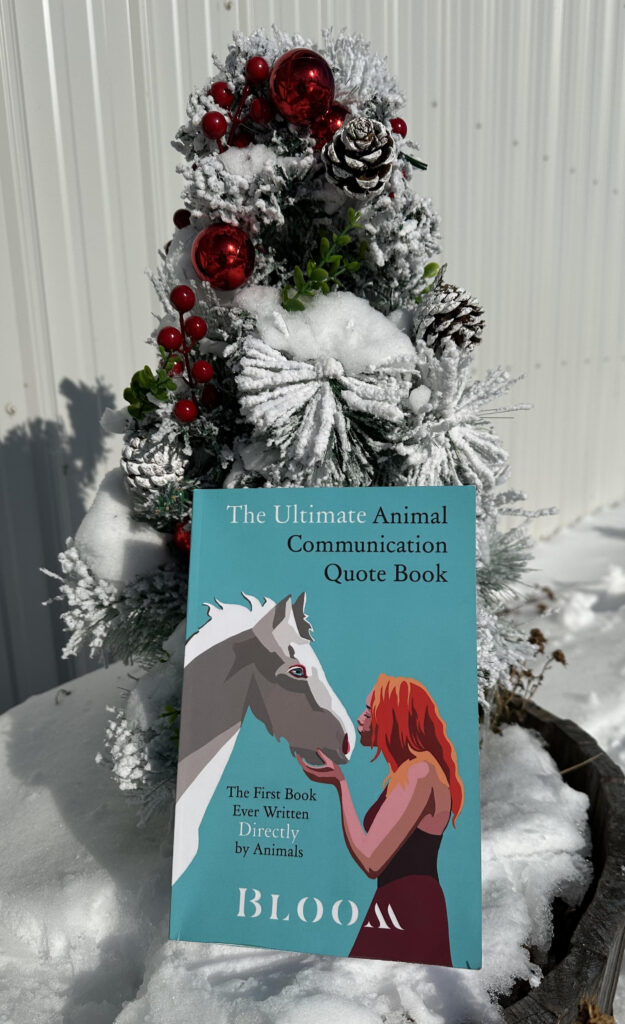
And [it’s special] to know this type of relationship is possible. It’s possible to talk through these types of details. I know that they’re excited, and they all wanted to be involved. My horse, Horizon, my Mustang, really wanted to be on the cover. I talked through it with my different animals, and I was like, okay, well, I need a cover design. And Horizon was immediately like, “Me, pick me, I wanna be on the cover!”
So, I designed her on the cover, and it just makes me happy every time I see it. This little image of the two of us. As large-scale as this project is, it’s also coming from my personal experience. And so I was really happy to be able to integrate that.
I remember it was kind of a novelty when we all started making social media accounts for our animals, and now there's books written by our animals. A book... hopefully, mine will be the first of many. I hope that this will not be a one hit wonder kind of thing. I hope that this becomes more normalized.
What advice or feedback would you give for someone who's thinking about writing or publishing a book, but they're hesitating - maybe they feel like it's too overwhelming or it's too hard?
Well, first of all, I would tell them to join your program or one of your programs, because I know you have different options. I did the one where I did most of the work myself, and I was just guided through it. I know you also have options where you and your company take on some of their responsibility, too, and so I would just encourage them to go look at your options and find out which one is best for them.
I’m very independent, so I really liked doing the whole thing myself, but some people aren’t. Some people want more help, and you have another tier for that, too.
It's so clear, and it's so specific, and it's so strategic the way you guide us through each individual step. I think that's kind of rare to find a spiritual, creative type person who's also highly detail-oriented. Finding someone like you just feels very rare and very special to me, and I feel like you did a really good job of blending that.
There are guided meditations that people can use, and there are group sessions for support, and there is group writing – group zoom calls where everyone just writes. And so wherever you’re at in the process, there’s help, and there’s support.
And I feel like writing the book and publishing the book are two pretty different things.
I know writing the book is such an emotional experience, and you’re putting so much of yourself into it. And then publishing the book becomes a lot more about the details and about the logistics and about strategy. And if strategy isn’t a strong suit, you know, Natalie has options for that, too. Whatever type of experience you want to have, however much control you want to have over the process, there’s a place for you in this program.
I know that people’s processes are different. Mine went relatively quickly, I think because I had so much built-up motivation, like this was something I had wanted to do for so long.
As soon as I had the tools, I just took off with it. And I’ve noticed that for some of the other students, it’s a little bit slower. You know, they’re still in the process of writing. They still hit writer’s block. They still need to work through some things. Some of them, the book is still a concept, and I know that you’re helping guide them through that, too.
I feel like you understand the entire process – from the conception of the idea of the book, through the writing process, through editing and publishing, and how to find your beta readers, your test readers.
There are steps, and there are modules, and there’s community support for all of it.
It is a really huge endeavor. Publishing a book is no joke. It is a lot of work. It really is. And for me, it was a very joyful work. It was a privilege because it's something that I know that not everyone gets to do, even if they want to, just because they don't have access to the kind of resources that I now do because of this program.
And so I’m really excited about that too, about the concept of publishing becoming more available to people. The fact that you don’t have to be screened by an agent, and you don’t have to be seen as profitable by a publishing company. It makes room for those of us who are just starting out who don’t already have a foot in the door. And I think it opens up room for a lot more voices, too, a lot of different types of books.
I’ve really loved the diversity in the program, the ideas people have, the artwork they’re making, and the concepts that are coming out. It’s very revolutionary. You basically removed the gatekeeper. There are no gatekeepers telling us whose work fits the ideal of what publishers know will sell because they just need to make a profit.
But when it’s just me, and I believe in my own work, and even if it didn’t ever sell on a large scale, it would be deeply rewarding for me on a personal level to have the book published.
That’s motivation enough. That’s the energy that I needed to get it done. So I just feel like this opens the door to so many people, and if you’re feeling called, go walk through it, you’re going to be fine.
It’s very empowering for sure, to just be like, “Wow. I can share my voice in this way, and no one can stop me.”
No one’s even trying to stop me. It’s just an open road now.
📖 Grab your copy of The Ultimate Animal Communication Quote Book
📸 Follow along with Johanna on Instagram
📲 Follow along with Johanna on TikTok
Work with us to write & publish your book @ www.bookmagic.co/mastermind